
Everything you post in the forums is public and is published under a Creative Commons Attribution 4.0 license (CC BY 4.0) — free for anyone to quote and build on, with credit. See the FAQ for details.
Home › Forums › Conrad Blickenstorfer (Pen Computing Magazine) › How did Pen Computing magazine start?
- This topic has 14 replies, 2 voices, and was last updated 2 days, 14 hours ago by
 John Jerney.
-
AuthorPosts
-
June 17, 2026 at 5:56 pm #65
 John JerneyKeymaster
Conrad,
Tell us the story of how you were involved in starting Pen Computing magazine. Share some fun stories please. 🙂
-John
July 13, 2026 at 10:18 pm #82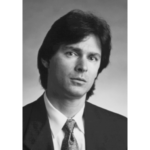 Conrad BlickenstorferParticipant
How did Pen Computing Magazine start? Well, at that time, around 1993, I was a corporate CIO and part of my job was investigating and implementing the latest tech for the organization I worked for, the New York State Dormitory Authority. That included interesting things like the portable computers Jeff Hawkins created at GRiD Systems, SUN Microsystems workstations, emerging network and video conferencing tech, all the cool stuff Apple did, especially with desktop publishing, and so on. I had personally bought one of the first Apple Newton PDAs and, imperfect though it was, it blew my mind! The Newton was like something I had dreamed of as a little boy — a small box that you could stick in your pocket and it had all the answers (well, that really would take another two decades, but the basic idea was there).
So when a friend of mine, a guy from a publishing family, approached me with the idea of doing a magazine completely dedicated to “pen computing” — which at the time was sort of the summary term for tablet computers and emerging handhelds — I quickly was on board. I would create the magazine itself, and Howard would handle the printing, marketing and distribution.
We both chipped in $2,000 for a grand total of $4,000 to launch a commercial print magazine! We actually couldn’t have chosen a worse time. While “pen computing” had been the hot new thing in the late 1980s and early 1990s, excitement had fizzled when it became obvious that handwriting recognition really wasn’t ready for prime time (and, as it turned out, it would never be). But that didn’t stop us. So I created a 100-page magazine, and Howard scored a distribution deal for us, and a printer who’d take a chance on us. It was NOT easy to convince anyone to advertise in a mag on pen computers when word was that the tech was dying.
But somehow we managed to do that first magazine, all glossy and professional, show it at all the trade shows, and drum up interest. In that first issue we reported on the Motorola Envoy, the Apple Newton 110, the IBM Thinkpad 730T, the Toshiba T200CS tablet, the Compaq Concerto, mobile tech, what worked and what didn’t, and so on. People thought we were nuts, and perhaps, probably, we were. But Pen Computing Magazine actually took off. We believed in the tech, were thrilled with it, wrote about its glorious future. That future would actually come, but it would take much longer than we expected. Had anyone told us back then that mobile would take over and well over a BILLION smartphones would be sold by 2025, even we wouldn’t have believed it.
-
This reply was modified 1 month ago by
 Conrad Blickenstorfer.
July 13, 2026 at 10:38 pm #84John JerneyKeymasterConrad,
The premier issue is in the museum collection.
Pen Computing Magazine – Premier Issue
I remember running into you personally shortly after that, at one of the many mobile computing conferences at the time (though I can’t remember which one specifically). I was seriously impressed with the quality of your magazine and the sheer amount of content and effort that went into producing it.
Please tell us about what you remember about putting together that premier issue. For example, how did you assemble the early team of contributors?
I also recall you telling me once about the internal debate your team had about how much detail to put on the cover (a little versus a lot). In the end, you had what some might consider a “busy” cover. I thought it was perfect.
-
This reply was modified 1 month ago by John Jerney.
July 29, 2026 at 12:16 am #90Conrad BlickenstorferParticipantEarly on, the “team” was just Howard and me. Howard was hustling trying to get advertising and prepress and all. And creating the magazine, all of it, was on me. By myself. So I went from corporate CIO with a big budget to working for a startup creating a commercial magazine all by myself. I had been to a few mobile tech trade shows by then and gotten to know some people, and some became contributors. So I commissioned articles on what I felt were core issues for understanding “pen computing” — handwriting recognition, hardware, wireless, software…. everything. And, on top of commissioning articles and hoping we’d find the money to pay them, I wrote articles myself. A big initial editorial foremost. And a big feature on the Newton, I think. But writing wasn’t all. I also did all the layout, all the graphics, the entire pagination. And that was in the earliest days of some of the publishing software. There really was a lot of trial and error.
The cover was a big thing, and there I did run out of steam. I didn’t have enough imaging material. Commercial cover layout was new to me. My partner Howard helped a lot — he had experience with the way it was all done with traditional publishing (big staff, tried-and-true methods, etc.). But we didn’t really speak the same language — not in “language” language (I am a native Swiss, though I already had been in the US for quite a few years), but in terms of the trade. I spoke tech, Howard spoke publishing. So there was a bit of, let’s say… intense phone conversation.
As for the cover. It wasn’t great. It really wasn’t. And that was on me. Maybe, after doing that first 100-page commercial tech magazine, I had just run out of steam. But remember, back then you had to have actual pictures, from a camera with film in it, or you had what a manufacturer gave you. You couldn’t just play around with hundreds of images and Photoshop, then run it through AI. The cover maybe showed better than everything else just what an impossibly difficult and unlikely job it was to do that first magazine of Pen Computing. It was all determination and the sheer thrill for that emerging mobile technology that would eventually, many years later, be in almost everyone’s hands.
July 29, 2026 at 11:21 pm #91John JerneyKeymasterConrad,
What was Howard’s last name? And how did you meet Howard? If I remember correctly, Howard’s wife Lisa also became involved with the magazine. How did that happen? And where was your first office located? Tell us about those early days publishing the first few issues.
August 1, 2026 at 4:31 pm #92Conrad BlickenstorferParticipantI initially met Howard Borgen through a newsletter I did at the time. I can’t recall how we actually got in closer contact, that’s well over three decades ago. I was still in my corporate CIO job in the early 1990s, and our headquarters were in Manhattan. At some point I met Howard in person in Manhattan, and he talked about some ideas he had for launching a new magazine. That’s how the idea and concept for Pen Computing was born. Howard was well connected in publishing, and so we managed to score a meeting with one of the national magazine distributors. They looked at our proposal and, much to my surprise, signed us up right on the spot. That’s when we both realized that this was real. I left the corporate job, and plunged into that new venture. We were going to have a magazine!
Howard lived on Long Island and I lived in Albany, upstate New York. Initially we worked in our respective home offices. We spent hours and hours on the phone, fleshing out all aspects of creating that magazine. Me on the creative and production side, Howard covering all business aspects. Looking back, I honestly have no idea how we managed to do it, just the two of us. Plus, of course, Howard’s brilliant can-do wife Lisa. I created a full layout/mock-up of that first 100-page issue. We took that to trade shows and potential advertisers. We practically worked 24/7.
And then we had that first issue. 100 pages, all glossy, perfect-bound with a spine, not just stitched together. A real magazine. I can’t recall how we made it all work financially early on. It wasn’t easy. Getting advertising was tough. Remember, we didn’t have any start-up money to speak of. We didn’t take out loans. Just enthusiasm, some good connections, and a LOT of work.
But the magazine took off. After the second issue or the third, Howard set up a professional office on Long Island, hired a small staff. In the midst of all of this, I realized my life-long dream of moving to California. That was in 1994. I set up a “real” office in Rancho Cordova, outside of Sacramento. Our landlord was a graphics and prepress business that owned the building. So there was much synergy with them. Howard then hired a full-time advertising staff for the East and West Coast. I met and hired David MacNeill, a gifted writer and tech enthusiast, who’d become my right-hand man, as well as a great friend, for years to come. We started the Aeon Publishing Group, because we already had plans for adding other magazines. Looking back, it was insane. I really don’t know how we did it all.
August 10, 2026 at 4:17 pm #93John JerneyKeymasterConrad,
Why Rancho Cordova/Sacramento instead of the Bay Area? I was in Sunnyvale at the time. We were close, but not exactly neighbors.
Also, how did you meet David? I remember him: a really smart and good-humored guy. Was Howard part of Aeon Publishing, or was that a separate west coast operation with you and David?
August 10, 2026 at 4:54 pm #94Conrad BlickenstorferParticipantWhen I decided to move to California, sure, Silicon Valley was attractive, as were several other areas. But my rational selection criteria were a) not very earthquake-prone, b) not very fire-prone, and c) still affordable. The Sacramento area came up, and being roughly equidistant from the Bay area and Lake Tahoe, it seemed (and turned out to be) a good choice. So I bought a house in Folsom, and a few months later set up the Pen Computing office in nearby Rancho Cordova.
David MacNeill so happened to teach computer classes nearby, and I think he was also writing articles about the Apple Newton, of which he was a huge fan. So we sort of found each other. Dave immediately wanted to work for Pen Computing Magazine, and I hired him on the spot. One of the best things I ever did.
As for Aeon Publishing, I think Howard came up with that when he felt that Pen Computing would not remain our only publication. And he was right — only a year or two after Pen Computing, we launched Digital Camera Magazine.
August 13, 2026 at 4:22 am #96John JerneyKeymasterConrad,
Haha. I moved permanently to Silicon Valley in 1989, exactly one week before the Loma Prieta earthquake. I was in a single-story building in San Jose, about 12 miles from the epicenter, when the quake struck, and was close enough to a door to run outside to the parking lot. I sat down on the ground and the shaking was so intense that it knocked me on my side from a sitting position. I’ll never forget it.
OK, at this point in the story, you are in the Sacramento area (Folsom is a nice choice for a place to live) and have hired David. Roughly what issue are we talking about, and how did your approach change being on the west coast? Being in Rancho Cordova, you were about two hours from the Bay Area (with a bit of backwind). At that time, a lot of the innovation was centered around the Bay Area. Tell us about that time.
August 13, 2026 at 1:33 pm #97Conrad BlickenstorferParticipantYou say “at that time, a lot of the innovation was centered around the Bay Area. Tell us about that time.” Well, it WAS an incredible time. I’d pretty much known since the late 1980s that I definitely wanted to move to California and in some way be part of that innovation. I remember driving through Milpitas and going, “this is where SUN Microsystems is!!” or San Jose, or Palo Alto, or Menlo Park or Mountain View, and just be thrilled. Or Cupertino where Apple was!!! It was just magical. I remember being at the San Jose convention center when the Motorola Envoy was introduced, with Magic Cap running on it. At that conference I met Nigel Ballard from the UK who’d become a major contributor to Pen Computing Magazine (and had his Zoomer stolen at that conference.
So moving to California, close to Silicon Valley, definitely had a very positive impact on our fledgling magazine. I was actually able to have regular meetings at Apple, discussing the Newton and its ecosystem. And our office on Sunrise Boulevard in Rancho Cordova turned out to be our own innovation center. Tom Mornini, our landlord who ran the prepress building our office was in, was a hardcore techie himself. He was a guy with tons of ideas and endless energy, almost like a silent partner in making Pen Computing Magazine a voice in all that emerging handheld tech of the 90s. Howard, my partner, seemed to like the energy of the West Coast as well — he flew over from New York whenever we had an issue ready for pre-press, to make sure we got everything right…
August 13, 2026 at 4:59 pm #98John JerneyKeymasterConrad,
The thing I always noticed about Pen Computing magazine was the density — it was literally packed full of articles, photos, ads, everything. You didn’t even leave much room for margins! Producing a quality magazine, especially in the 1990s, could be a herculean task. How did your team do it? What was the editorial process, the mechanical process (software, hardware, etc.), and how did it ultimately get to our newsstands?
August 13, 2026 at 5:17 pm #99Conrad BlickenstorferParticipantHow did we manage to create such a large magazine packed with features photos, reviews and all right from the start? I think it was a combination of factors. Howard was already fully familiar with the whole printing and distribution process. So he handled that side of the business. We had excellent distribution right from the start, dealing with big commercial distributors. Sometimes we were even in unlikely places, like Walmart and such.
‘The other big factor was our use of emerging layout, imaging, and publishing tech. At the time, most magazines were still created the old-fashioned, traditional way. Large staffs, bureaucracy, layers or staffers and management. Layout practically by hand. We did none of that. We used Apple Macs, Photoshop for imaging, and QuarkXPress for layout from the start. That’s where my corporate experience came in handy. As CIO I had been investigating all these new technologies for years. I knew what worked and what didn’t. And, as said above, having our office in the same place as a high-tech prepress business made for great synergy. Plus, of course, all of us LOVED emerging mobile tech. It never was just a job.
August 13, 2026 at 5:26 pm #100John JerneyKeymasterWhat were some of the challenges at the time?
One of the challenges we faced, for example, was access to images. Many vendors supplied us with high-quality chromes (slides) and sometimes printed photos. But others didn’t. I remember experimenting very early on using a Logitech black and white hobby camera. The results were just short of acceptable for our non-color publication (though we might have used one or two images somewhere in the issues).
What did you deliver to the printer? When we started in 1991, for example, this was well before Adobe PDF. What were some of your hurdles?
August 13, 2026 at 7:13 pm #102Conrad BlickenstorferParticipantOur primary challenge was getting advertising. Though we had a fancy 100-page, perfect-bound glossy tech mag, we were still brand-new, and in 1993 we covered a niche — pen computing — that had been declared dead and gone by the industry and most expert. We’d go to tech trade shows, and finding almost nothing with touch screens or pens. Maybe two or three products. But that very scarcity also led to strong relationships.
Yes, getting images was a problem early on. Most of what we got were 36mm color slides. Which were a pain to work with. And we were constantly running back and forth between our office and the local 1-hour-Photo. Then we had an aha! moment — the Olympus digital camera I had bought at the Incredible Universe store in Sacramento was actually good enough for magazin product photography! That changed EVERYTHING.
Advanced though they were, our techie prepress shop initially still did the layout with film. We gave them the files, and then they put that on film, cobbling it together manually. But not for long. We egged each other on, advancing publishing tech in the process.
Advertising actually did pick up quite a bit within a year or two. And that’s the lifeblood of publishing. All those huge printing bills were daunting. All the while, with the pen industry virtually dead and only a few verticals looking at tablets, a small circle of believers hung in there, speaking at trade shows (Andy Seybold, Tim Schmitt, Bill Lempesis, ets), trying new ideas.
August 13, 2026 at 7:57 pm #103John JerneyKeymasterThis leads me to another question. What pen technology did you and your team use?
I remember adopting almost every PDA that came through the office as a personal device (for at least a few months), including the original Newton, the Sony Magic Link, the PalmPilot, the Casio Cassiopeia, and more. I didn’t just test them. I made them part of my life.
Interestingly, the pen device I probably used the most was the GRiD Convertible, on which I wrote many, many articles while traveling between our Sunnyvale, California and Vancouver, B.C. offices.
Which devices became your workhorses?
-
This reply was modified 2 days, 13 hours ago by John Jerney.
-
This reply was modified 1 month ago by
-
AuthorPosts
- You must be logged in to reply to this topic.